Start with the load path
Identify the expected forces, their directions and the mounting points that transfer them. Continuous fiber performs most effectively when its path follows the structural role of the part.
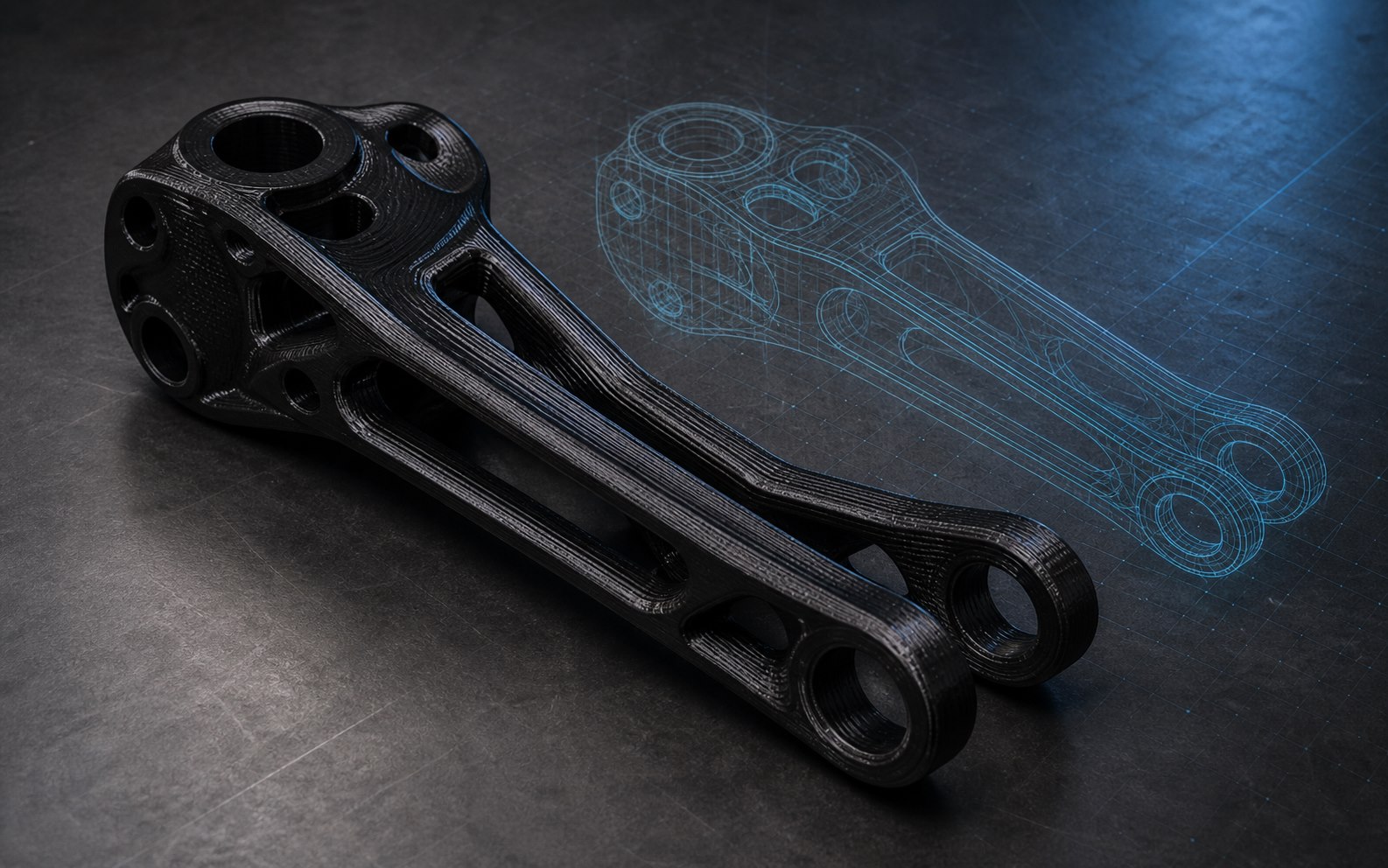
ENGINEERING GUIDE 03
A practical starting point for geometry, load paths, interfaces and fiber placement before quotation.
Identify the expected forces, their directions and the mounting points that transfer them. Continuous fiber performs most effectively when its path follows the structural role of the part.
Use adequate material around holes, inserts and fasteners. Smooth transitions, ribs and generous internal radii can reduce abrupt changes in section and provide room for realistic fiber routing.
Build orientation affects support, surface finish, layer direction and feasible fiber paths. Share mating parts, critical dimensions and operating conditions so these choices can be reviewed together.
INTLSIGMA
Attach the CAD model and describe the real load and assembly conditions.